Every home and business facility contains electrical assets that represent significant financial investment — from high-end kitchen appliances and entertainment systems to industrial-grade motors, HVAC units, and sensitive computing equipment. Yet despite the cost of these assets, many property owners overlook one of the simplest and most effective safeguards available: the voltage protector. Without proper voltage regulation, even a brief surge or drop in supply voltage can silently degrade or catastrophically destroy equipment that took years to pay for. Understanding why a voltage protector is not optional but essential is the first step toward making genuinely informed decisions about electrical asset protection.
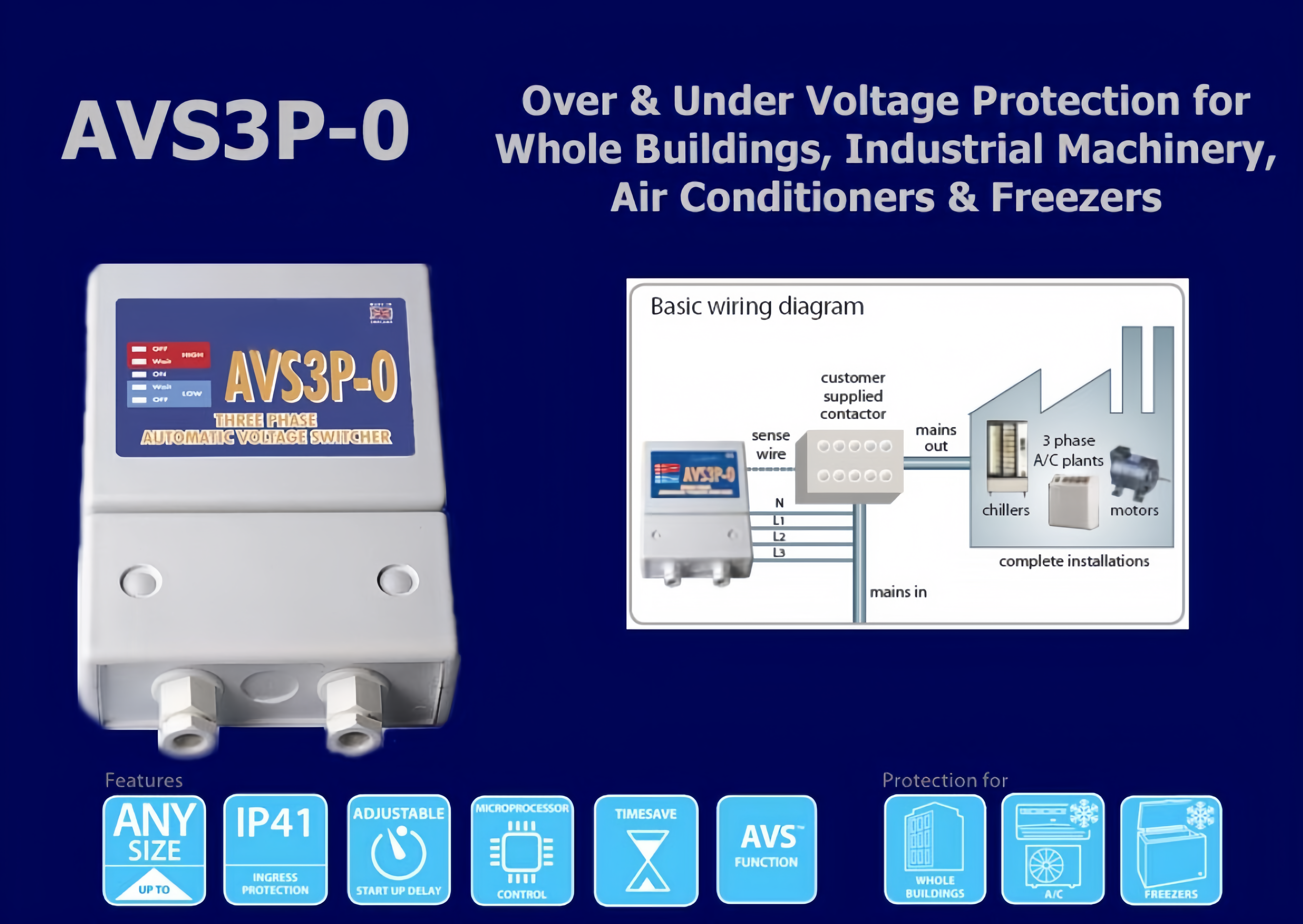
The relationship between voltage instability and equipment damage is well-documented in electrical engineering. When supply voltage deviates beyond the safe operating range of a device, internal components experience stress that accumulates over time or causes immediate failure. A quality voltage protector acts as an intelligent barrier between the power supply and your connected devices, continuously monitoring incoming voltage and cutting power whenever conditions fall outside safe thresholds. For homeowners, small businesses, and industrial operators alike, this single device can mean the difference between decades of reliable equipment service and repeated, costly replacements.
Overvoltage is one of the most damaging electrical conditions, and it is far more common than most people realize. When the voltage delivered to a device exceeds its rated maximum, the internal circuits, insulation materials, and semiconductor components are forced to handle energy loads they were not designed for. A voltage protector addresses this directly by detecting when voltage rises above the preset upper threshold and immediately disconnecting the load.
The consequences of sustained overvoltage without a voltage protector include accelerated insulation breakdown in motors, premature failure of capacitors and transistors in electronics, overheating in transformer windings, and significantly shortened operational lifespan across all connected appliances. In household settings, expensive devices like refrigerators, washing machines, air conditioners, and home theater systems are particularly vulnerable. In commercial or industrial environments, the financial impact of such losses can be enormous.
What makes overvoltage especially insidious is that damage often accumulates invisibly. Equipment may continue operating for weeks or months before a dramatic failure, making it difficult to trace the root cause without proper monitoring. This is precisely why a proactive voltage protector installation is so much more effective than reactive repairs after damage has occurred.
While overvoltage receives much of the attention, undervoltage and rapid voltage fluctuations pose an equally serious threat to expensive electrical assets. When voltage drops below safe operating levels, motors must draw higher currents to maintain their output, causing excessive heat buildup that degrades windings and bearings over time. Compressors in refrigerators and air conditioning units are especially susceptible to this type of damage.
Voltage fluctuations — rapid oscillations between high and low levels — create mechanical stress in electromechanical components and logic errors or data corruption in digital systems. A properly calibrated voltage protector monitors the supply continuously and responds to both over and undervoltage conditions, ensuring the connected device is only energized when power quality is within an acceptable range.
In regions where grid infrastructure is aging or underdeveloped, voltage instability may occur multiple times per day. Without a voltage protector in the circuit, equipment in such environments faces extreme long-term reliability risks. Even in regions with generally stable grids, events like utility switching operations, heavy storm activity, or local industrial load changes can introduce transient voltage disturbances that bypass unprotected appliances.
The economic case for investing in a voltage protector becomes especially compelling when the protected asset carries a high purchase price. Consider the cost of replacing a high-end refrigerator, a commercial espresso machine, a large-screen television, or a medical-grade piece of diagnostic equipment. In nearly every scenario, the cost of a voltage protector is a small fraction of the replacement cost of the asset it guards.
Beyond direct replacement costs, there are indirect costs to consider: installation labor, downtime for businesses that depend on equipment availability, data loss from corrupted digital systems, and the inconvenience of procurement delays for specialized equipment. A single voltage protector installed correctly can prevent all of these consequences simultaneously. When viewed through this lens, a voltage protector is not an expense but a risk management investment with a clearly favorable return.
It is also worth noting that many manufacturer warranties are voided when damage is attributable to power quality issues, particularly overvoltage events. In such cases, the property owner bears the full financial burden of repair or replacement. Installing a voltage protector creates a documented layer of protection and demonstrates reasonable care for the equipment, which can be relevant in warranty claim discussions.
Modern appliances and electronics are engineered to operate within tight voltage tolerances. Unlike older, simpler equipment that had larger operating margins, today's devices incorporate sophisticated microcontrollers, variable frequency drives, digital displays, and miniaturized power supply circuits that are sensitive to even modest voltage deviations. A voltage protector calibrated to the correct thresholds for such equipment provides exactly the level of precision defense these devices require.
Medical devices, laboratory instruments, and precision manufacturing equipment carry particularly strict voltage sensitivity requirements because their operational accuracy depends on stable electrical conditions. For these applications, a voltage protector is not just about preventing physical damage — it is about maintaining the calibration integrity and measurement accuracy that defines the equipment's core function. Any voltage anomaly that reaches these devices without filtering can compromise both the equipment and the results it produces.
In residential environments, smart home appliances, variable-speed washing machines, inverter air conditioners, and premium audio-visual systems all fall into the category of precision electronics that benefit substantially from voltage protector coverage. As household appliances become more technologically sophisticated, the need for stable, clean power delivery only increases.
At its core, a voltage protector functions through a continuous monitoring loop. The device measures incoming supply voltage in real time and compares it against preset upper and lower limits. When voltage remains within the safe operating range, the protector allows power to flow normally to connected equipment. The moment voltage breaches either threshold, the voltage protector activates its relay mechanism to disconnect the load.
Modern voltage protectors include a time-delay feature that prevents the equipment from reconnecting immediately after a voltage anomaly passes. This delay, typically adjustable between several seconds and a few minutes, allows the supply voltage to stabilize fully before the device resumes operation. This is particularly important for compressor-based appliances like refrigerators and air conditioners, where rapid cycling during unstable voltage conditions can cause mechanical damage to the compressor.
Digital voltage protectors provide additional value through visual displays that show real-time voltage readings, allowing users to monitor power quality and identify patterns in voltage behavior. This information can be valuable for diagnosing chronic power quality problems in a facility and justifying further remediation measures such as automatic voltage regulators or backup power systems.
A voltage protector designed for household use is typically installed at the socket level or as a plug-in unit between the outlet and the appliance. These devices are compact, require no professional installation in most cases, and begin protecting the connected equipment immediately upon activation. For commercial or industrial settings, panel-mounted or DIN rail voltage protectors are available that protect entire circuits rather than individual devices.
The installation of a voltage protector does not interfere with the normal operation of the equipment under stable power conditions. From the user's perspective, the device is invisible when everything is working correctly. It only becomes apparent when it does exactly what it is designed to do: interrupt power during an unsafe voltage event and restore it once conditions normalize. This non-intrusive protective role makes the voltage protector one of the most practical electrical safety additions available.
For property owners with multiple expensive assets across different rooms or circuits, a systematic approach to voltage protector deployment — starting with the highest-value and most voltage-sensitive equipment — allows for gradual, budget-conscious rollout of comprehensive protection throughout the facility. Prioritizing assets like HVAC systems, refrigeration units, entertainment electronics, and computing equipment provides the highest initial return on protection investment.
The most immediately understood benefit of a voltage protector is preventing catastrophic equipment failure. However, the long-term benefits extend well beyond single-incident protection. By consistently maintaining stable voltage delivery to connected assets, a voltage protector reduces the cumulative stress that shortens equipment lifespan under normal grid variability. Even voltage fluctuations that never reach failure-inducing levels can degrade components over time if they occur repeatedly without protection.
Reduced component stress translates directly into fewer service calls, less frequent part replacements, and longer intervals between major maintenance events. For businesses that rely on operational continuity — restaurants, hotels, healthcare facilities, data centers, and manufacturing plants — these benefits have meaningful financial and operational implications. The voltage protector becomes a contributor to overall equipment reliability management rather than just a single-point safeguard.
Homeowners also benefit from reduced maintenance frequency on appliances. Compressors that are not subjected to repeated undervoltage stress last longer. Motor windings in washing machines and dishwashers that receive stable voltage operate more efficiently and experience less thermal wear. Across an entire household's inventory of electrical appliances, the aggregate lifespan extension attributable to consistent voltage protection represents real financial value over years of ownership.
A less commonly discussed benefit of the voltage protector is its indirect contribution to energy efficiency. When appliances receive stable, correctly regulated voltage, they operate at their designed efficiency points. Motors running under undervoltage conditions draw excess current to compensate, increasing energy consumption without increasing useful output. By preventing undervoltage operation, a voltage protector ensures that connected equipment runs as efficiently as its design intends.
Operational reliability is another dimension that a voltage protector supports. In environments where downtime is costly — cold storage facilities, medical clinics, server rooms, or food service operations — the confidence that comes from knowing equipment is protected against voltage anomalies has operational value that goes beyond accounting calculations. Staff can trust that equipment will perform when needed, and contingency planning can focus on other risk categories.
Ultimately, the voltage protector represents a mature, cost-effective, and proven approach to electrical asset management. It addresses one of the most common and preventable causes of equipment damage and failure, provides real-time monitoring capability, and requires minimal ongoing maintenance once installed. For any facility or household where electrical assets represent significant value, deploying a voltage protector at critical points in the power distribution path is simply sound engineering practice.
Appliances with compressors, motors, or sensitive electronics benefit most from a voltage protector. This includes refrigerators, air conditioners, washing machines, televisions, computers, medical devices, and any appliance that uses a variable-speed drive or microcontroller-based control system. High-value items with long replacement cycles or critical operational roles should be prioritized for voltage protector coverage.
The appropriate threshold settings for a voltage protector depend on the nominal supply voltage in your region and the operating tolerances of your equipment. Most household appliances in North America are rated for 120V operation and tolerate a range of approximately plus or minus 10%. Your voltage protector should be configured to disconnect the load if voltage exceeds 132V or drops below 108V as a general guideline, though checking individual appliance specifications will yield more precise thresholds.
A voltage protector and a surge protector serve different but complementary roles. A voltage protector monitors sustained over and undervoltage conditions and disconnects the load when voltage exceeds set thresholds. A surge protector is designed to absorb or redirect very brief, high-energy voltage spikes that occur in microseconds. For comprehensive protection of expensive electrical assets, using both devices together provides the broadest coverage against the full spectrum of power quality threats.
Plug-in voltage protector models designed for household use require no special tools or technical knowledge — they simply connect between the wall outlet and the appliance. Panel-mounted models for larger circuits may require installation by a licensed electrician. Once installed, a voltage protector requires very little maintenance. Periodic checking of threshold settings and visual inspection for physical condition are generally sufficient to ensure continued reliable operation over its service life.

 EN
EN