Manufacturing plants face constant electrical challenges that can disrupt operations and damage expensive equipment. Power fluctuations, voltage spikes, and electrical surges pose significant threats to industrial machinery, making reliable protection systems essential for continuous production. An over under voltage protector serves as the first line of defense against these electrical anomalies, safeguarding valuable assets and ensuring operational continuity. Modern manufacturing facilities require sophisticated protection devices that can respond quickly to voltage variations while maintaining precise control over electrical systems. The selection of an appropriate over under voltage protector depends on various factors including plant size, equipment sensitivity, and operational requirements.
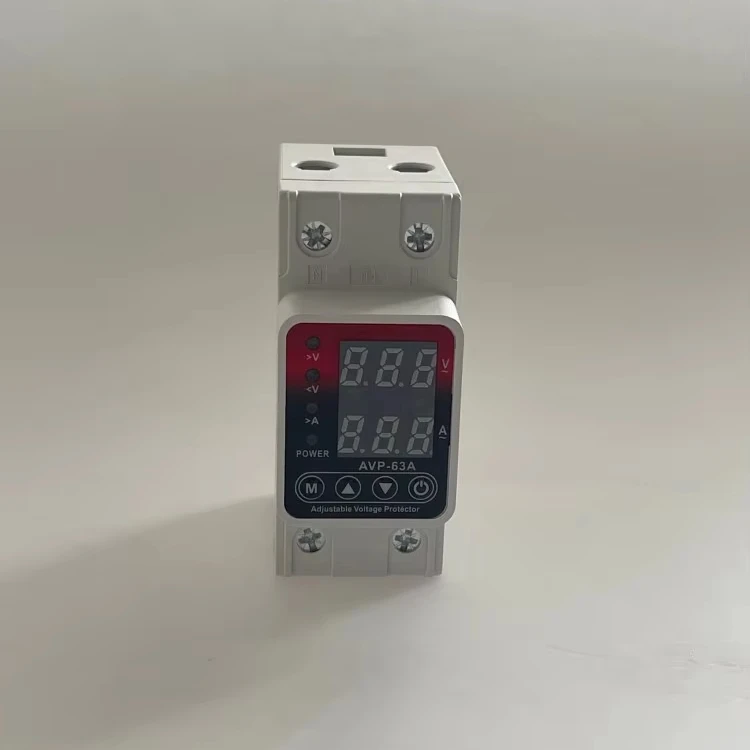
Voltage stability forms the foundation of efficient manufacturing operations. Industrial equipment operates within specific voltage parameters, and deviations can cause immediate shutdowns or long-term damage. An over under voltage protector monitors electrical supply continuously, detecting when voltage levels exceed or fall below predetermined thresholds. Manufacturing plants invest millions in sophisticated machinery that requires consistent power quality to function optimally. Without proper protection, voltage fluctuations can cause motor burnouts, control system failures, and production line disruptions that cost thousands of dollars per hour in lost productivity.
The complexity of modern manufacturing systems demands advanced protection strategies. Automated production lines, robotic systems, and computerized controls all depend on stable voltage supply. Even minor voltage variations can trigger safety shutdowns or cause quality issues in manufactured products. An effective over under voltage protector must respond rapidly to protect sensitive equipment while avoiding unnecessary interruptions during normal operations. The economic impact of electrical failures in manufacturing extends beyond immediate repair costs to include lost production time, waste materials, and potential safety hazards.
Manufacturing environments experience various types of electrical disturbances that require different protection approaches. Overvoltage conditions occur when supply voltage exceeds normal operating levels, often caused by lightning strikes, switching operations, or utility grid issues. Undervoltage situations develop when supply voltage drops below acceptable levels due to heavy loading, utility problems, or equipment failures. An over under voltage protector must distinguish between temporary fluctuations and sustained problems to provide appropriate responses. Transient overvoltages can damage electronic components instantly, while prolonged undervoltage conditions can cause motors to overheat and fail gradually.
Electrical noise, harmonic distortion, and phase imbalances create additional challenges for manufacturing facilities. Modern production equipment generates electromagnetic interference that can affect sensitive control systems. Power quality issues often compound each other, creating complex scenarios where multiple protection strategies become necessary. An advanced over under voltage protector incorporates filtering capabilities and sophisticated monitoring to address these interconnected problems. Understanding the specific electrical environment helps manufacturers select protection devices that address their unique challenges effectively.
Response time represents the most critical performance parameter for any over under voltage protector in manufacturing applications. Industrial equipment can suffer irreversible damage within milliseconds of experiencing dangerous voltage levels. High-quality protection devices respond to overvoltage conditions in less than one millisecond, effectively isolating equipment before damage occurs. The accuracy of voltage monitoring ensures that protection systems activate only when necessary, preventing false trips that interrupt production unnecessarily. Precision voltage sensing circuits must maintain calibration accuracy over wide temperature ranges and extended operating periods.
Modern digital over under voltage protector systems offer programmable response characteristics that can be customized for specific applications. Manufacturing facilities benefit from adjustable trip points, time delays, and reset functions that optimize protection for different types of equipment. Advanced models provide hysteresis settings that prevent chattering during marginal voltage conditions. The ability to fine-tune protection parameters allows plant engineers to balance equipment safety with operational continuity, minimizing unnecessary shutdowns while ensuring comprehensive protection.
Comprehensive monitoring capabilities distinguish professional-grade voltage protectors from basic residential units. Manufacturing applications require detailed voltage logging, trend analysis, and predictive maintenance features. An advanced over under voltage protector records voltage events, duration of disturbances, and frequency of occurrences to help identify patterns and potential problems. Real-time display systems provide operators with immediate feedback on electrical conditions and system status. Digital interfaces enable integration with plant monitoring systems for centralized control and data collection.
Diagnostic capabilities help maintenance teams identify developing problems before they cause equipment failures. Voltage trend analysis reveals gradual changes in power quality that might indicate utility issues or internal wiring problems. Event logging provides valuable data for insurance claims and helps engineers optimize protection settings based on actual operating conditions. Advanced over under voltage protector models offer communication protocols that enable remote monitoring and control through industrial networks. These features transform protection devices from passive safety components into active monitoring tools that contribute to overall plant efficiency.
Proper sizing ensures that an over under voltage protector can handle the electrical demands of manufacturing equipment without introducing performance limitations. Current capacity must exceed maximum load requirements with appropriate safety margins for starting currents and temporary overloads. Industrial motors, welding equipment, and high-power machinery create significant inrush currents that protection devices must accommodate without false tripping. Voltage drop across protection contacts must remain minimal to prevent performance degradation in sensitive equipment. Thermal capacity considerations become critical in continuous-duty applications where protection devices operate at high currents for extended periods.
Contact life expectancy affects long-term reliability and maintenance costs in manufacturing environments. High-quality over under voltage protector units use silver alloy contacts rated for hundreds of thousands of switching operations. Arc suppression technologies reduce contact wear and extend service life under challenging electrical conditions. Mechanical durability becomes important in industrial settings where vibration, temperature cycling, and environmental contaminants can affect device performance. Proper sizing includes consideration of future expansion plans and potential load additions that might increase electrical demands.
Manufacturing environments present unique challenges that require specialized protection device designs. Temperature extremes, humidity variations, and airborne contaminants can affect the reliability of electrical components. An industrial-grade over under voltage protector must operate reliably in temperatures ranging from freezing to over 150 degrees Fahrenheit. Sealed enclosures protect internal components from dust, moisture, and chemical vapors commonly found in manufacturing facilities. Vibration resistance ensures proper operation near heavy machinery and production equipment that generates mechanical disturbances.
Electromagnetic interference from welding equipment, motor drives, and switching devices can affect sensitive protection circuits. Shielded designs and filtered inputs help over under voltage protector systems maintain accuracy in electrically noisy environments. Installation flexibility becomes important when space constraints require creative mounting solutions or when protection devices must integrate with existing electrical panels. Certification requirements vary by industry and application, with some manufacturing processes requiring explosion-proof designs or specialized safety approvals.
Effective integration of an over under voltage protector requires careful planning and coordination with existing electrical systems. Main panel installations provide whole-facility protection but may lack the granular control needed for diverse manufacturing equipment. Dedicated protection for critical circuits offers targeted coverage while allowing non-essential loads to continue operating during voltage disturbances. Modular designs enable flexible installation approaches that can accommodate varying protection requirements throughout a manufacturing facility. Proper wire sizing and routing ensure that protection devices can interrupt fault currents safely without creating additional hazards.
Control integration allows over under voltage protector systems to communicate with plant automation systems and provide coordinated responses to electrical disturbances. Relay outputs can trigger backup generators, activate alarm systems, or initiate controlled shutdowns of sensitive equipment. Input connections enable remote monitoring and control of protection settings through supervisory systems. Proper grounding and bonding practices ensure that protection devices operate effectively and do not introduce additional electrical hazards. Installation documentation and labeling facilitate future maintenance and troubleshooting activities.
Comprehensive commissioning ensures that over under voltage protector systems function correctly and provide expected protection levels. Initial testing verifies proper trip points, response times, and reset characteristics under various operating conditions. Coordination studies confirm that protection devices operate selectively without causing unnecessary shutdowns of unaffected circuits. Periodic testing maintains protection system reliability and identifies potential problems before they affect operations. Documentation of test results provides baseline performance data for future comparisons and maintenance scheduling.
Training programs help plant personnel understand protection system operation and maintenance requirements. Operators need to recognize normal system indications and respond appropriately to alarm conditions. Maintenance staff require detailed knowledge of testing procedures and calibration requirements. Emergency response procedures ensure that personnel can safely restore systems after protection events while identifying and correcting underlying problems. Regular review and updating of procedures keeps protection strategies current with changing plant conditions and equipment upgrades.
Regular maintenance ensures reliable operation of over under voltage protector systems throughout their service life. Inspection schedules should include visual checks for physical damage, connection tightness, and environmental contamination. Contact condition assessments verify proper operation and identify wear patterns that might affect future performance. Calibration verification confirms that trip points and timing characteristics remain within specified tolerances. Documentation of maintenance activities helps identify trends and optimize service intervals based on actual operating conditions.
Replacement component availability ensures minimal downtime when maintenance or repairs become necessary. Standardizing on specific over under voltage protector models throughout a facility simplifies spare parts inventory and reduces training requirements. Preventive replacement programs proactively address components that show signs of wear before they fail in service. Emergency replacement procedures minimize production interruptions when unexpected failures occur. Vendor support relationships provide technical assistance and ensure access to current product information and updates.
Continuous performance monitoring identifies opportunities to optimize over under voltage protector settings and improve overall system reliability. Data analysis reveals patterns in voltage disturbances that might indicate utility problems or internal wiring issues. Trend monitoring helps predict when maintenance or equipment replacement might be necessary. Performance benchmarking compares actual protection system performance with design specifications and industry standards. Regular review of protection events helps refine settings and reduce unnecessary trips while maintaining adequate protection levels.
System optimization balances protection effectiveness with operational continuity requirements. Fine-tuning trip points and time delays can reduce nuisance trips without compromising equipment safety. Coordination adjustments ensure that protection systems operate selectively and minimize the extent of outages during electrical disturbances. Upgrade evaluations assess whether newer protection technologies might provide improved performance or additional features. Cost-benefit analysis helps justify investments in advanced protection systems based on potential savings in equipment damage and production losses.
An effective over under voltage protector should respond to dangerous voltage conditions within one millisecond or less for manufacturing applications. This rapid response time prevents damage to sensitive electronic components and control systems that can be destroyed almost instantaneously by overvoltage conditions. The exact response time depends on the specific application and equipment being protected, but industrial-grade devices typically offer adjustable time delays ranging from milliseconds to several seconds to accommodate different protection strategies and avoid nuisance tripping during temporary disturbances.
Voltage thresholds for manufacturing equipment typically range from 10% to 15% above and below nominal voltage levels, though specific settings depend on equipment tolerance and application requirements. Most industrial motors and machinery can tolerate voltage variations of plus or minus 10% without significant performance degradation. However, sensitive electronic equipment may require tighter tolerances of plus or minus 5% to prevent malfunctions or damage. An over under voltage protector should be configured with appropriate hysteresis settings to prevent oscillating operation during marginal voltage conditions.
Quality over under voltage protector systems are designed to handle high starting currents typical of industrial motors without false tripping or contact damage. Motor starting currents can reach 6 to 8 times normal operating current for several seconds during startup. Professional-grade protection devices use heavy-duty contacts rated for high inrush currents and incorporate time delays that prevent tripping during normal starting sequences. Some advanced models include motor protection features that distinguish between normal starting transients and actual fault conditions.
Voltage protection systems should undergo comprehensive testing at least annually, with more frequent inspections recommended for critical applications or harsh operating environments. Monthly visual inspections can identify obvious problems like loose connections or physical damage. Semi-annual functional testing verifies proper trip points and response times using calibrated test equipment. Annual calibration ensures that an over under voltage protector maintains specified accuracy throughout its operating range. More frequent testing may be required in facilities with high electrical disturbance rates or where equipment downtime carries significant economic consequences.

 EN
EN