Every home is filled with electronic devices that are sensitive to fluctuations in electrical supply. Televisions, refrigerators, air conditioners, washing machines, and computers are all designed to operate within a specific voltage range. When the power supply deviates from that range — either rising too high or dropping too low — the consequences can be damaging, costly, and even dangerous. This is precisely where over voltage under voltage load protection becomes an essential safeguard for every household.
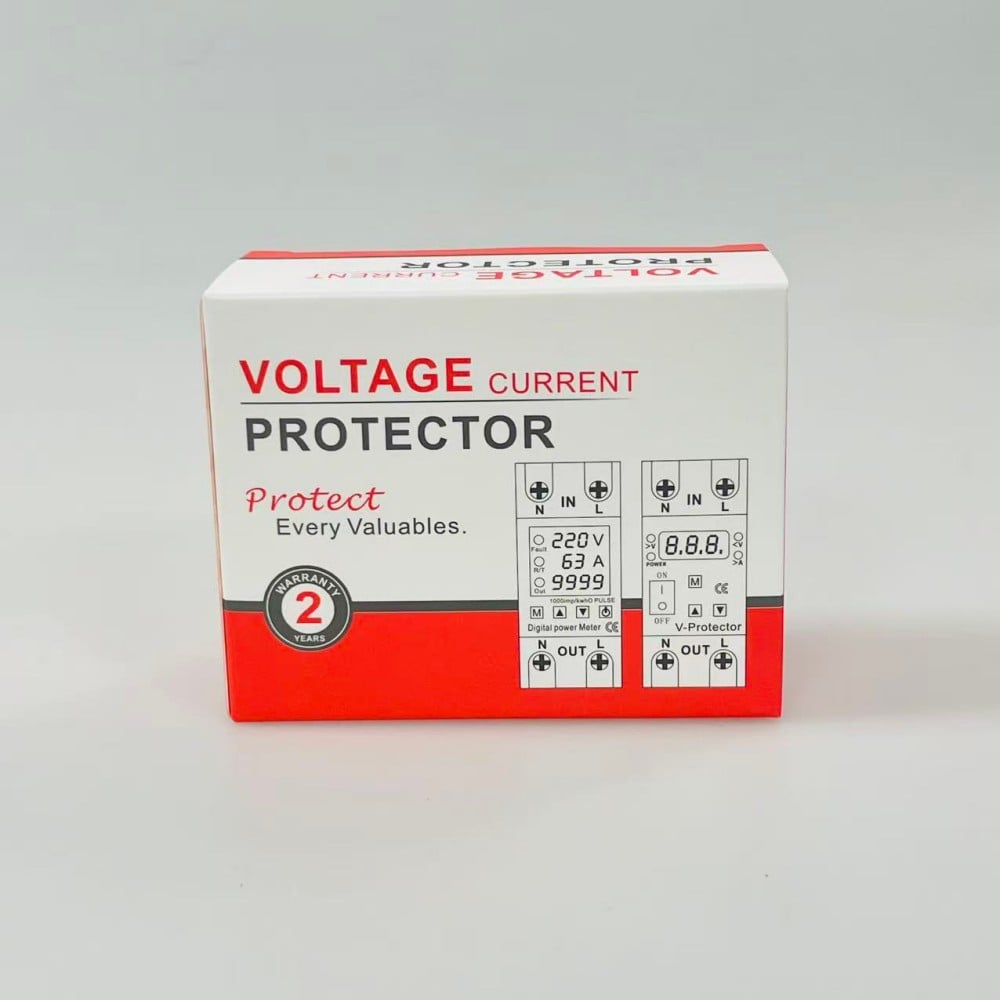
Understanding how over voltage under voltage load protection works gives homeowners and facility managers a clearer picture of why this technology is no longer a luxury but a practical necessity. The mechanism behind it is both logical and elegant — a smart circuit continuously monitors incoming voltage and automatically disconnects the load whenever readings fall outside safe operating limits. This article walks through the full picture of how this protection functions, why it matters, and what makes it effective for defending the devices you rely on every day.
At the heart of over voltage under voltage load protection is a sensing circuit that monitors the incoming supply voltage in real time. This monitoring process runs continuously as long as the device is plugged in, creating an uninterrupted watch over the electrical environment. The moment the voltage reading starts moving outside the preset acceptable range, the protection system begins responding immediately.
The sensing component uses precise electronic references — typically voltage comparators or microcontroller-based logic — to evaluate whether the incoming voltage is within tolerance. This is not a passive function. The detection circuit is always active, always comparing the live reading against a safe threshold defined by the manufacturer based on standard electrical specifications.
This continuous monitoring is what distinguishes over voltage under voltage load protection from simpler surge protectors. It doesn't just react to sudden spikes; it watches for prolonged high voltage, sustained low voltage, and everything in between. The result is a far more comprehensive defense for connected home appliances.
When the monitoring circuit detects a voltage deviation, over voltage under voltage load protection responds by triggering a relay or electronic switch that disconnects the load from the power supply. This disconnection happens within milliseconds, often before the connected device can even register the abnormal condition. The speed of this response is critical — many electronic components can be damaged within a very short exposure window.
After disconnection, the protection device does not simply stay off permanently. Instead, it enters a waiting period — commonly referred to as a time delay or recovery time — during which it continues to monitor the incoming voltage. Once the supply returns to a safe and stable level and remains there for a sufficient duration, the relay closes again and power is restored to the connected device automatically.
This automatic reconnection feature is particularly useful in homes where power fluctuations are temporary, such as during brief utility disturbances or switching events on the grid. The homeowner does not need to manually reset the device after every event, making over voltage under voltage load protection both convenient and reliable in real-world conditions.
When voltage rises above the rated maximum for a home appliance, excess electrical energy is forced through components that were not designed to handle it. In resistive components like heating elements, higher voltage means higher current draw, which generates more heat than the component can safely dissipate. Over time — and sometimes immediately — this leads to insulation breakdown, component burnout, and catastrophic failure.
In devices with electronic control boards, elevated voltage can destroy semiconductors such as transistors, capacitors, and integrated circuits. These components are highly voltage-sensitive, and even brief exposure to levels 10 to 15 percent above rated limits can cause irreversible damage. This is why over voltage under voltage load protection that responds within milliseconds is far more valuable than manual intervention, which would always arrive too late.
Refrigerators and air conditioning units are particularly vulnerable because their compressor motors are designed to start and run within specific electrical parameters. Sustained over voltage causes motor windings to overheat, shortening their lifespan dramatically and increasing the risk of fire. Effective over voltage under voltage load protection addresses exactly this risk by cutting power before the motor is exposed to harmful conditions.
Not all voltage damage is immediate and dramatic. Some of the most destructive over voltage events are recurring low-level spikes that individually seem harmless but accumulate over time to weaken components. Capacitors lose their rated capacitance, solder joints develop micro-cracks, and circuit board traces experience thermal stress — all without any obvious sign until a sudden failure occurs.
Over voltage under voltage load protection acts as a consistent barrier against these accumulative events. By interrupting the power supply every time voltage exceeds the threshold, it prevents the repeated stress cycles that lead to premature aging of electrical components. This is a critical but often overlooked benefit that extends the service life of expensive home appliances significantly.
Under voltage — sometimes called brownout conditions — creates a different but equally dangerous scenario for home appliances. When voltage drops below the rated minimum, motors and compressors must draw higher current to maintain their required output power. This increased current generates excessive heat in the motor windings, which accelerates insulation degradation and dramatically shortens motor life.
Air conditioners, refrigerators, pumps, and washing machines all rely on induction motors that are especially vulnerable to this behavior. A compressor running under brownout conditions may appear to function normally to the user, but internally it is being stressed beyond its design limits with every operating cycle. Over voltage under voltage load protection prevents this by disconnecting the appliance until the supply voltage recovers to a safe level.
This is a scenario that many homeowners in areas with unstable grid infrastructure face regularly, particularly during peak demand periods or in regions where the distribution network is under strain. Having reliable over voltage under voltage load protection installed at the socket level provides a passive but powerful defense against these conditions without requiring any user action.
Digital devices and appliances with microcontroller-based control systems face a different kind of harm from under voltage. When the supply voltage drops below the operating threshold for logic circuits, processors can begin executing random instructions, memory states can become corrupted, and firmware may enter undefined states. This can result in permanent settings loss, software errors, or hardware damage to the control board.
Smart home appliances — including inverter air conditioners, smart refrigerators, and digital washing machines — are particularly sensitive to this because their control electronics are always active and cannot tolerate unstable supply conditions. Over voltage under voltage load protection provides a clean power environment by ensuring these devices are only energized when the supply is confirmed to be within a healthy operating range.
The most practical and accessible form of over voltage under voltage load protection for residential use comes in socket-plug format devices. These units are plugged directly into a wall outlet, and the appliance is then connected to the protection device. This setup requires no electrical installation knowledge, no wiring changes, and no professional intervention — making it immediately usable by any homeowner.
These plug-type protectors are ideal for high-value appliances such as large-screen televisions, washing machines, refrigerators, and air conditioning units. Since each device is protected independently, there is no single point of failure that could leave multiple appliances vulnerable simultaneously. The self-contained design of socket-level over voltage under voltage load protection also makes it portable and reusable if the homeowner moves or rearranges appliances.
When evaluating socket-level protectors, the key parameters to assess include the voltage trip thresholds for both over and under voltage, the response time of the disconnect relay, the time delay before reconnection, and the load current rating, which must match or exceed the connected appliance's power consumption. Choosing a unit with clearly specified parameters ensures reliable and appropriate protection for each application.
For broader coverage, over voltage under voltage load protection can also be deployed at the distribution panel level. Panel-mounted devices protect all circuits downstream from a single installation point, offering a more systematic solution for homes in regions with severe or frequent voltage instability. This approach is typically installed by a qualified electrician and covers the entire electrical load of the property.
While panel-level protection provides wider coverage, it is most effective when combined with socket-level protection for the most sensitive or valuable appliances. The two layers work together — the panel device handles grid-level events while individual socket devices provide a secondary filter for any residual variations that pass through. This layered strategy represents the most robust application of over voltage under voltage load protection in a residential setting.
Regardless of the installation approach chosen, the fundamental operating principle remains the same. The device monitors voltage continuously, disconnects when thresholds are exceeded, waits for stable recovery, and then restores power automatically. This behavior is consistent across all form factors of over voltage under voltage load protection, making the technology both scalable and adaptable to different home environments.
One of the most compelling practical benefits of deploying over voltage under voltage load protection in the home is the measurable extension of appliance service life. When motors, compressors, and electronic components are never exposed to out-of-range supply conditions, they experience less thermal stress, fewer insulation degradation cycles, and reduced component fatigue over time. The result is appliances that perform reliably for significantly longer than they would in an unprotected electrical environment.
Consider the cost of replacing a compressor in a central air conditioning unit or a control board in a high-end refrigerator. These repairs can easily cost hundreds of dollars, not counting installation labor. A single over voltage under voltage load protection device, by contrast, represents a small upfront investment that can prevent multiple such events over the years. The return on investment in terms of avoided repair and replacement costs is substantial.
Beyond direct repair savings, there is also the indirect value of avoiding downtime. A refrigerator that fails during a summer heat wave or a washing machine that breaks down at a critical time creates inconvenience and urgency costs beyond just the repair bill. Over voltage under voltage load protection helps prevent those scenarios from occurring in the first place.
Electrical fires caused by overheated appliance components are a serious residential hazard, and voltage irregularities are a known contributing factor. When motors run hot due to under voltage or components overheat due to over voltage, the risk of insulation combustion and arcing increases significantly. Over voltage under voltage load protection directly reduces this risk by preventing appliances from operating in conditions that would generate dangerous heat levels.
This safety benefit extends beyond just the appliance itself. In many residential fires, the origin is traced to a wall outlet, an appliance cord, or an internal component that experienced prolonged electrical stress. By ensuring that connected appliances are never exposed to harmful voltage conditions, over voltage under voltage load protection serves as a first line of defense against this category of residential fire risk.
Most residential over voltage under voltage load protection devices are calibrated to disconnect when supply voltage rises above approximately 250V or drops below around 180V for standard 220–240V systems. Some models offer adjustable thresholds to accommodate different appliance requirements or regional supply standards. Always verify the trip voltage specifications before purchasing to ensure they align with your electrical environment and the appliances being protected.
Over voltage under voltage load protection is compatible with a wide range of household appliances including refrigerators, air conditioners, washing machines, televisions, water heaters, and more. The key consideration is the load current rating of the protection device, which must match or exceed the current draw of the connected appliance. For high-power appliances like air conditioners or large refrigerators, it is important to select a unit rated for the appropriate amperage to ensure safe and reliable operation.
The disconnect response time for quality over voltage under voltage load protection devices is typically in the range of milliseconds to a few seconds, depending on the design and the severity of the voltage deviation. More sophisticated units may have intentional short delays to avoid unnecessary disconnections from brief transient events that resolve on their own. The reconnection delay after a fault clears is usually set between 30 seconds and several minutes to ensure the supply has fully stabilized before restoring power to the connected device.
Over voltage under voltage load protection primarily addresses sustained voltage conditions that fall outside the safe operating range rather than instantaneous surge events. However, devices that combine over voltage under voltage load protection with surge suppression components — such as metal oxide varistors or gas discharge tubes — can address both types of threats simultaneously. When purchasing a protection device, it is advisable to check whether surge protection is explicitly included as a combined feature if this is also a concern in your electrical environment.

 EN
EN